
How to calculate concrete for deck footings and Sonotubes
Use the inside diameter and filled height of each Sonotube shown on your deck plan. Calculate the concrete in the tube, then add a wider base separately if one is specified. Multiply by the number of identical footings and combine a second size when needed. The result shows litres and cubic metres; the bag count uses your chosen premix yield after adding your allowance.
The formulas behind the estimate
- Round pier
- π × (diameter ÷ 2)² × filled height
- Round base
- π × (base diameter ÷ 2)² × thickness
- Square base
- base width² × thickness
- Project volume
- sum of [(pier + base) × count] for each group
- Project bags
- round up [(project volume × (1 + extra % ÷ 100)) ÷ yield per bag]
With millimetre inputs: 1,000,000 mm³ = 1 L and 1,000 L = 1 m³. Base volume is zero for a straight pier. Use the same volume unit for the project and bag yield.
For posts embedded inside concrete-filled holes, use ourfence post concrete calculator.
Measuring Sonotube concrete
Read the tube's inside diameter and the height actually filled with concrete. Add a wider round or square base only when your footing detail calls for one. The post supported on hardware above the pier is not subtracted from the concrete volume.
Where to measure the footing
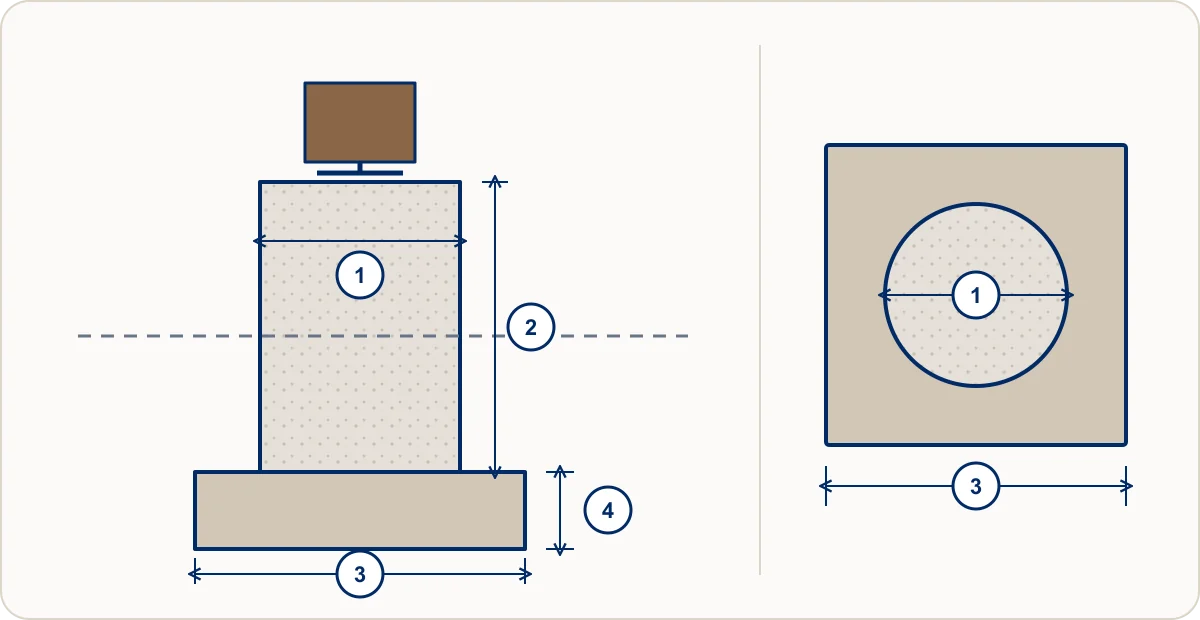
- Inside diameter of the pier
- Filled height of the pier
- Width or diameter of the base
- Thickness of the base
The side view is on the left and the top view is on the right. Measure pier height from the top of the base so its thickness is counted once. The post sits above the concrete.
Example: six tube piers
Six 300 mm diameter tubes filled 1,200 mm high contain about 509 L. Add 5% and the order becomes about 534 L (0.534 m³). With a verified 14 L yield per bag, that is 39 whole bags for a shared pour.
Read the tube and base as two shapes
A Sonotube size describes the form, but the inside diameter defines the concrete volume. If your permit drawing has a wider base, measure its depth below the tube separately. Some drawings show a belled or tapered base; this calculator models only a flat round or square base of uniform thickness. The height above finished grade is still concrete and belongs in the filled tube height. Keep the post and its bracket out of the pier measurement when the bracket sits on top.
Compare bags with a delivery
The bag estimate uses your product’s yield in litres, not just the weight printed on the front. The result rounds the shared project total once, which can be lower than buying whole bags for each pier separately. If you intend separate pours, look at bags per footing too. The cubic-metre result helps when asking a supplier about ready-mix; confirm the order minimum, access and mix specified on your plan before choosing between delivery and bags.
Using your postal code for a bag cost guide
The postal code helps locate a province or a covered metro area. The guide then prices a separate reference count of 30 kg concrete mix bags at about 14 L each, using published retail examples. The postal code checks the province; it does not change these published Canadian price examples. This is not a store-specific price or an estimate of frost-depth work.
If your chosen bag has a different yield, use the calculator's main bag count and enter that product's price per bag for a better material estimate. Confirm stock, tax, delivery and any minimum order with a nearby supplier. Neither the postal code nor the price changes the footing dimensions on your permit plan.
Retail examples (30 Sep 2026): Home Depot Canada.
Canadian planning checks
Frost depth, soil bearing and tributary loads can change the footing size. Obtain the dimensions from your permit drawing or local authority. Compare the bag count with a ready-mix delivery and verify the exact yield and suitability of the product.
Common questions
Do I use the Sonotube's nominal outside size?
Use its inside diameter, because that defines the concrete cylinder.
Does this size the footing for frost?
No. It estimates concrete for dimensions already selected on your deck plan. Verify depth and bearing requirements locally.