
How to calculate concrete for decking post footings
Take the inside diameter and filled height of each pier from your decking drawing. Work out the round pier volume, add a separate straight-sided pad if the detail shows one, then multiply by the number of matching footings. Add a second group for another footing size. Apply your chosen allowance to the combined volume, then divide by the yield printed on your premixed concrete bag for a whole-bag estimate.
The formulas behind the estimate
- Round pier
- π × (diameter ÷ 2)² × filled height
- Round base
- π × (base diameter ÷ 2)² × thickness
- Square base
- base width² × thickness
- Project volume
- sum of [(pier + base) × count] for each group
- Project bags
- round up [(project volume × (1 + extra % ÷ 100)) ÷ yield per bag]
With millimetre inputs: 1,000,000 mm³ = 1 L and 1,000 L = 1 m³. Base volume is zero for a straight pier. Use the same volume unit for the project and bag yield.
For posts embedded inside concrete-filled holes, use ourfence post concrete calculator.
From decking drawing to concrete order
Use the specified diameter and filled height of the pier. If the drawing shows a wider pad, enter its thickness separately so the same height is not counted twice. A post fixed on a base above the concrete does not displace the pier. This differs from a fence post embedded in its concrete hole.
Where to measure the footing
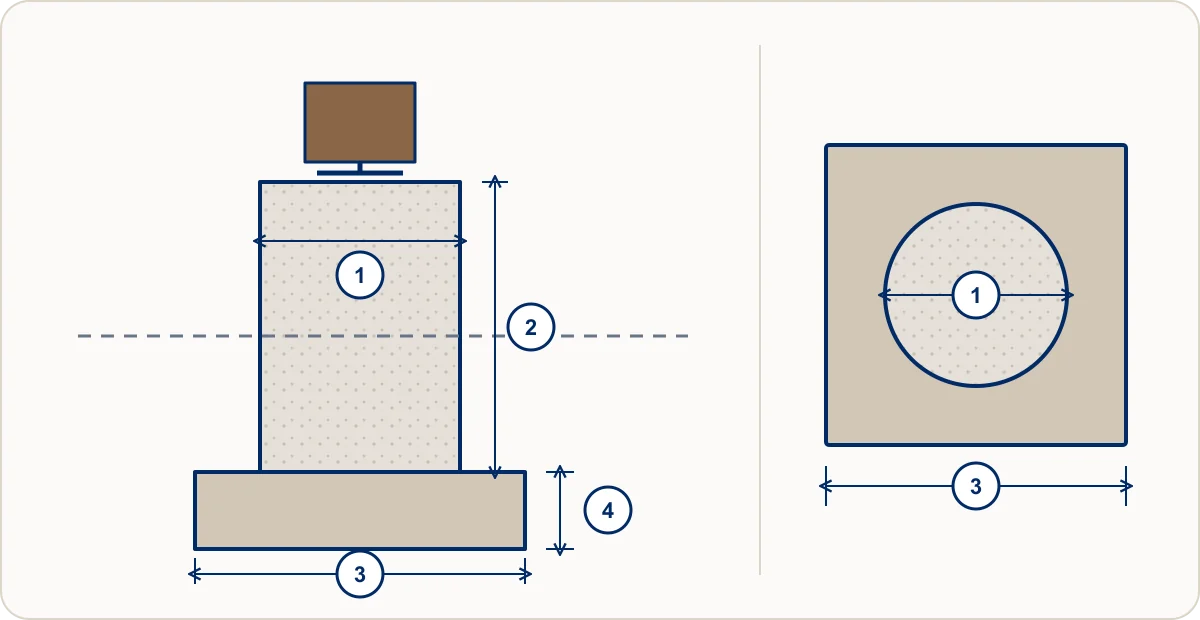
- Inside diameter of the pier
- Filled height of the pier
- Width or diameter of the base
- Thickness of the base
The side view is on the left and the top view is on the right. Measure pier height from the top of the base so its thickness is counted once. The post sits above the concrete.
Example: four formed piers
Four piers 300 mm across and 900 mm high contain about 254 litres of concrete before waste. With 5% extra, allow about 267 litres, or 0.267 m³. Divide this by the yield stated on your selected mix; at 10 L per bag that is 27 bags.
Check the detail before measuring
Your drawing may show a pier formed in a tube above a wider concrete pad. Measure the diameter of the filled tube and its height from the top of the pad to the top of the pour. Then measure the pad on its own. The dashed ground line in the image is only a reference: concrete above ground still belongs in the pier height. If the lower part slopes outward instead of having straight sides, these pad options will not describe its volume accurately.
Use the result at the merchant
The litre total tells you the amount of mixed concrete; the cubic-metre figure is easier to use when asking about a ready-mix delivery. For bags, divide the volume with allowance by the yield on the exact premix you plan to buy. A 20 kg bag of cement alone is not a 20 kg bag of concrete mix. If you will mix each footing on a different day, check the rounded bags-per-footing result as well as the project total.
What a postcode can tell you about cost
Enter a postcode to compare the concrete volume with published prices for 20 kg concrete mix bags. The guide counts bags at the reference mix's approximate 10 L yield. The postcode checks the location but does not change the published UK price examples. It cannot retrieve the price at your nearest merchant.
Your own supplier's price per bag is more useful for a purchase plan. Enter it above to price the bag count for your selected yield. Check bulk discounts, delivery charges and the mix specified on your drawing separately. The price guide never changes the litres or cubic metres of concrete needed.
Retail examples (30 Sep 2026): Wickes.
Before you buy
Check your decking design, ground conditions and local requirements for the actual footing detail. Ready-mix may be more practical than carrying many small bags. Check that the concrete product is suitable for the specified footing, not merely for setting a post in a hole.
Common questions
Is postcrete the same as concrete for a deck footing?
Post-setting products differ from structural concrete mixes. Follow your design specification and the product's stated use and yield.
Why is a pad counted separately?
The pad and pier have different widths and heights. Adding their non-overlapping volumes avoids treating the whole footing as one wide cylinder.